+48 32 40 10 350
 export@technomex.pl





A 2012 clinical study (Hesse et al.) demonstrated that patients receiving robot-assisted therapy improved twice as much in walking and
stair-climbing ability compared to standard physiotherapy alone. Remarkably, 7 out of 15 patients achieved independent walking and stair climbing after just 4 weeks, versus only 1 out of 15 in the control group. These benefits remained over time, confirming the long-term effectiveness of the therapy.
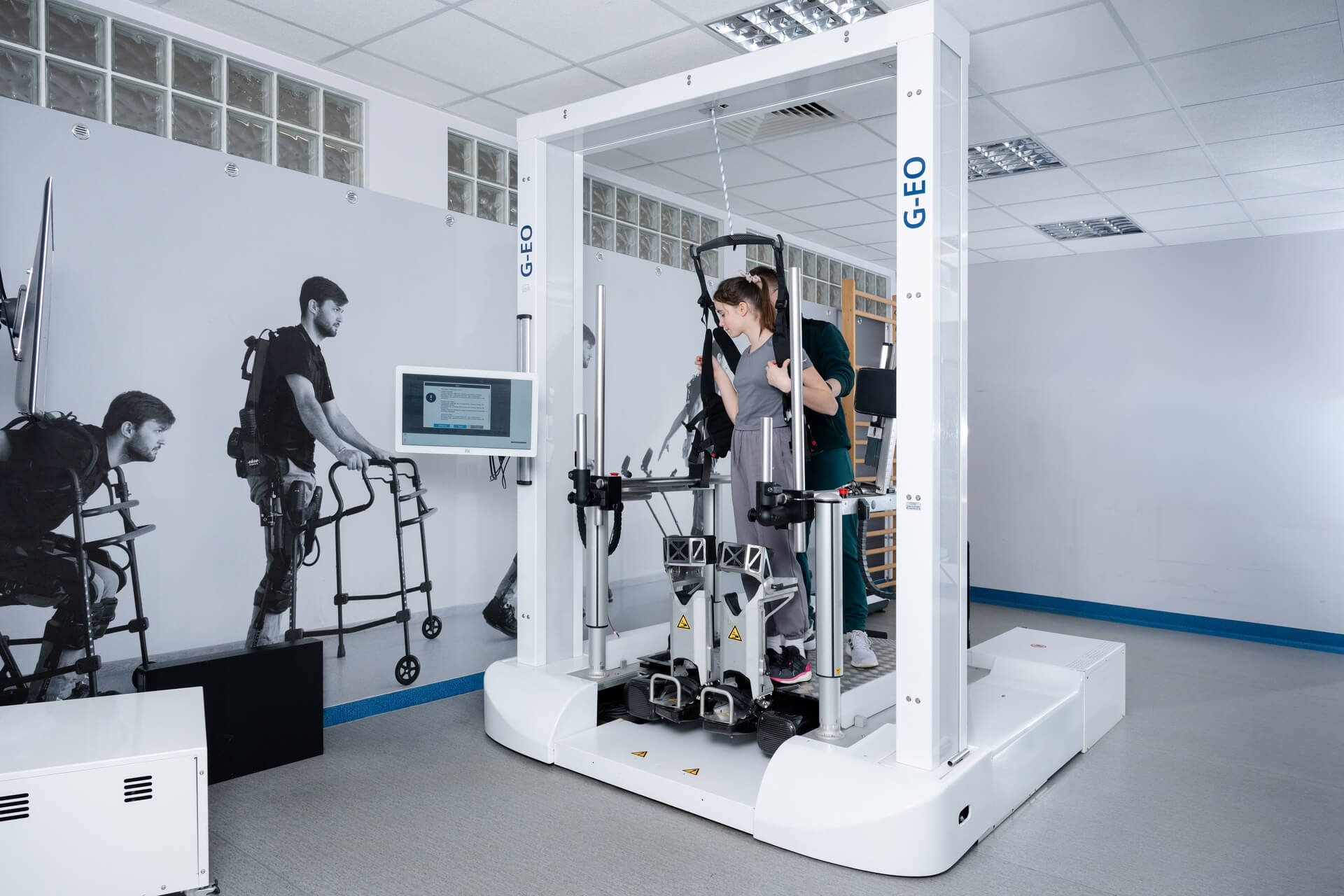
G-EO ensures correct hip and body positioning, a key factor for lasting neurological gait rehabilitation.
It integrates:
- Mechanical torso and hip control in three planes frontal, transverse, sagittal). Adjustable in
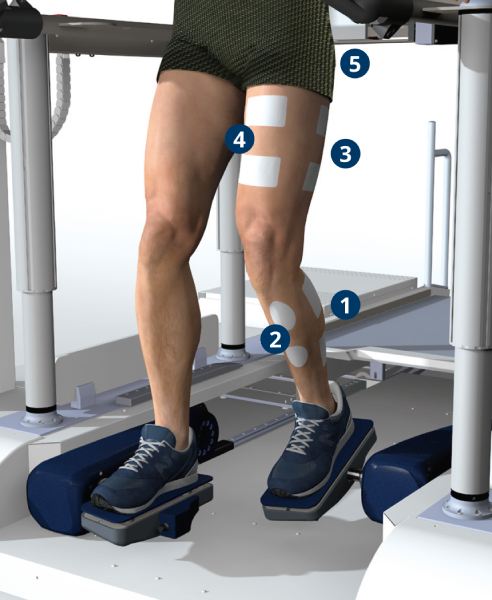
real time via a touchscreen GUI. Mechanical knee braces for knee stability. - Functional Electrical Stimulation (FES) targeted at affected muscles with precise activa-
tion timing during the gait cycle.
Customizable therapy settings include:
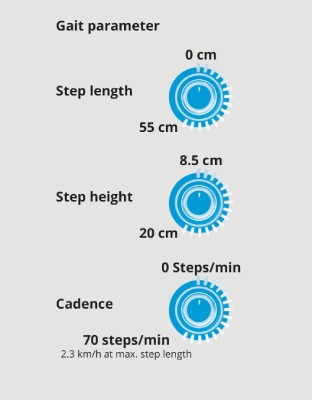
- Step length
- Height & speed
- Cadence,
- 3D body positioning,
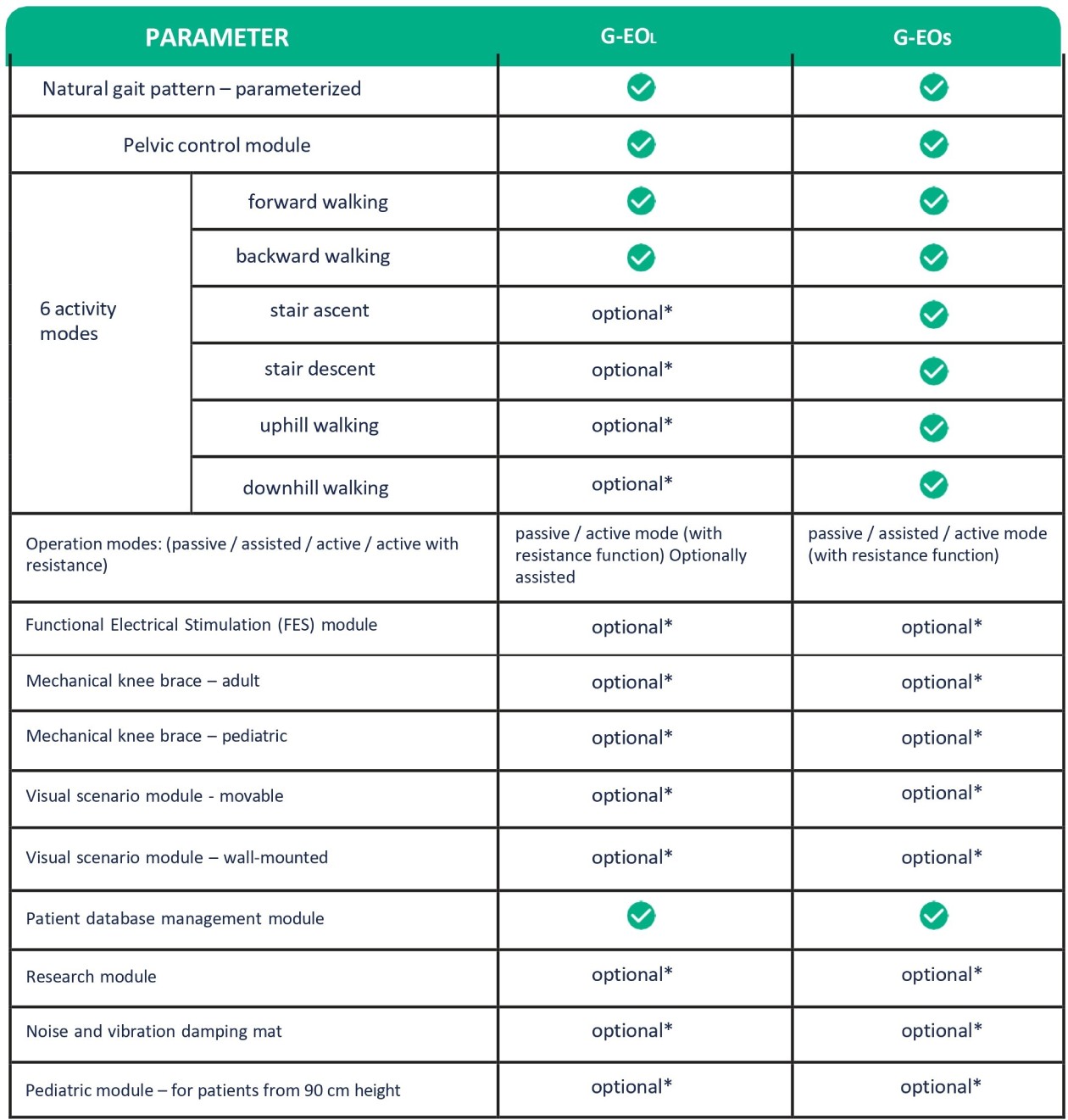
- 6 activity modes,
- 3 different modules,
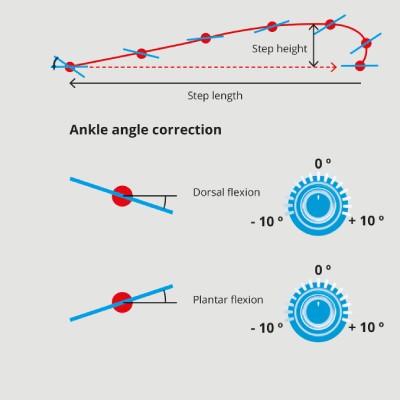
- Dorsal flexion,
- Plantar flexion.
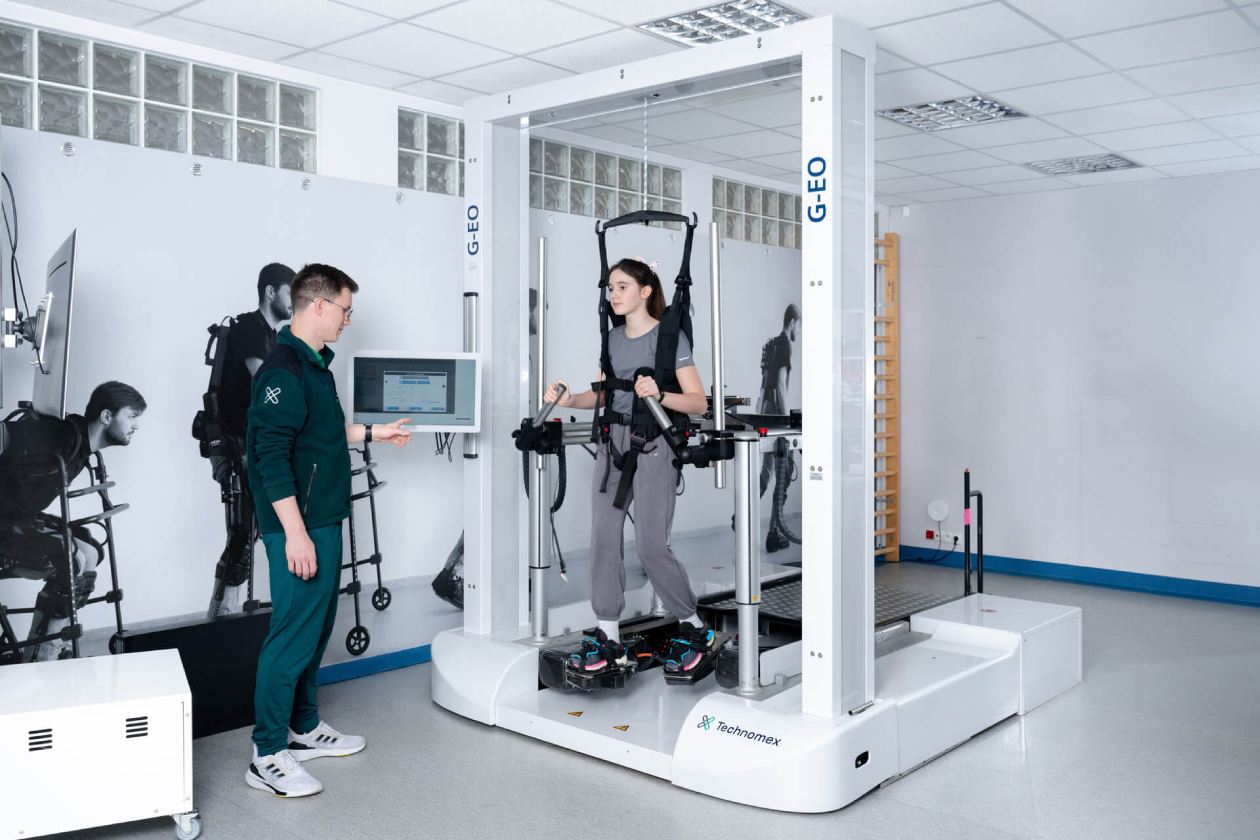
Technomex – a passion for robotic-assisted gait therapy
Technomex is a Polish company with many years of experience in the medical and rehabilitation industry. It specializes in designing and manufacturing innovative devices for movement therapy, hydrotherapy, and neurological and orthopedic rehabilitation. Technomex equipment is used in hospitals, rehabilitation centers, and private clinics worldwide The G-EO range of systems, which is based on the end-effector principle, simplifies the work of therapists, reduces the load on the body, and supports a broad and diverse spectrum of patients with limited movement and capability.
“Who wants to relearn walking, has to walk.”
Prof. Dr. Stefan Hesse (1960-2016)
- Former Head of the Neurology Department
at the Rehabilitation Clinic, Medical Park, Berlin - Founding member of Reha Technology AG
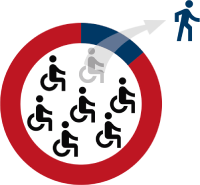
Study: Mehrholz, J. et al «Electromechanical-assisted training for walking after stroke.» Cochrane Database Syst Rev. 2013 Jul 25;7
The Cochrane Library 2013, Issue 7 (2)
One in 7
after stroke
Robotic-assisted gait therapy is an end-effector method in the rehabilitation of neurological and orthopedic patients. Technology has evolved significantly over the last few years in collaboration with leading clinics and universities. Today, robotic-assisted therapy is indispensible in neurological rehabilitation. Countless studies have verified the clinical evidence of the effectiveness of end-effector-based gait therapy in comparison with conventional therapy. The use of gait trainers in clinics and practices has significantly increased the economy and efficiency of gait rehabilitation, eased the physical workload of therapists and helped patients to begin walking independently in a more effective and targeted way. The Technomex G-EO gait trainer enables a wide variety of neurological pathologies to be treated very early on in a performance-related manner.
G-EO - reduce to the max
Individual and Automated
- Gait settings such as step length, step height and ankle alignment without interrupting the ongoing therapy session.
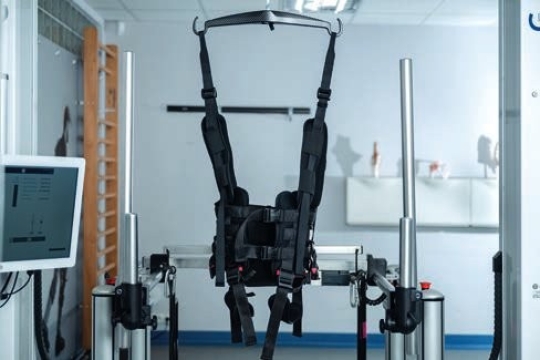
- Motorized and automatic weight support for up to 200 kg (440 lb) - dynamic and static.
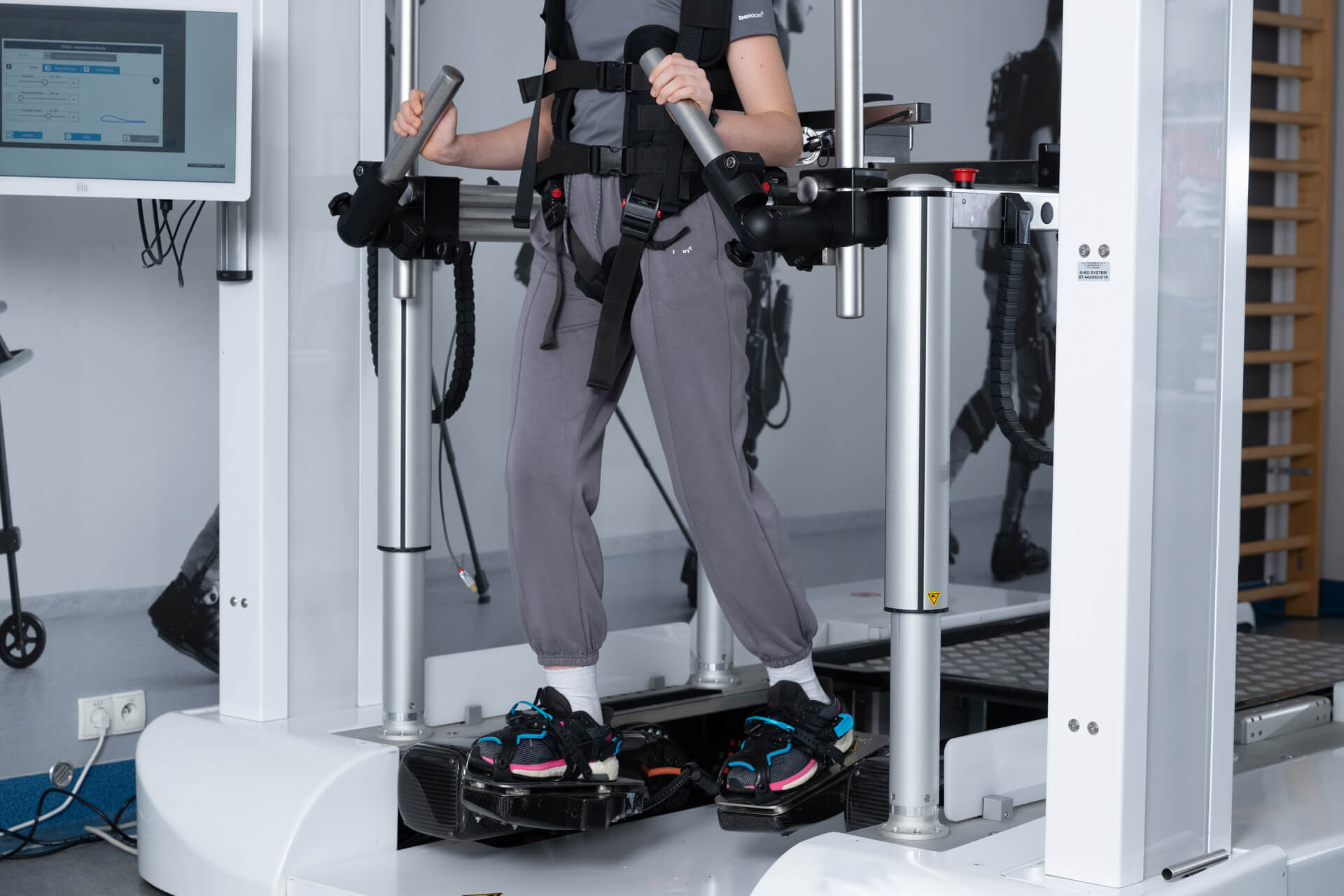
- Hip control mechanically active, with back pad.
Evaluating the therapy –
high intensity, short times & reproducible
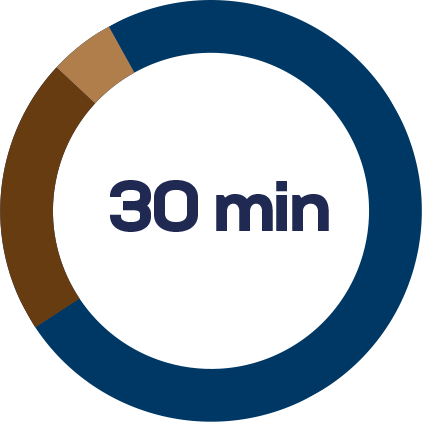
Neurological rehabilitation must be customized and tailored to individual patients with the correct intensity. To ensure a long-lasting, successful course of therapy, it is important to perform movements with a high level of repetition, for a specific task, and in a physiologically correct way. Reha Technology’s G-EO performs a key function precisely for this targeted, early and intensive therapy.
The robotic-assisted gait trainer simplifies and enhances both the course of therapy for therapists, as well as the therapy process as a whole. The patient, the therapist, and the field of therapy as a whole all enjoy huge benefits.
The physical workload of therapists is minimized through the use of robotic-assisted gait therapy. The therapist can focus on the patient and the therapy in a more precise and targeted way. This improvement to the therapy leaves more time for monitoring and informing the patient, which in turn leads to an important positive increase in both the intrinsic and extrinsic motivation of patients and therapists.
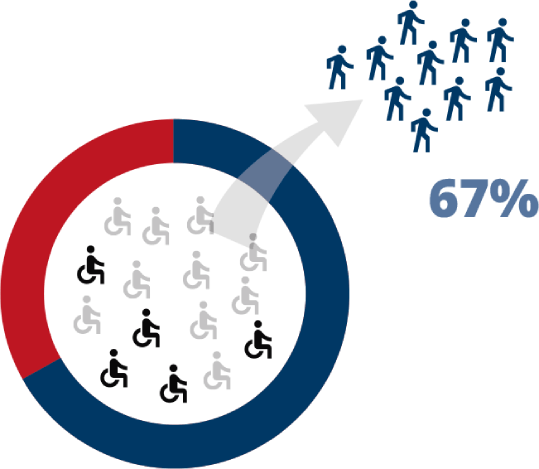
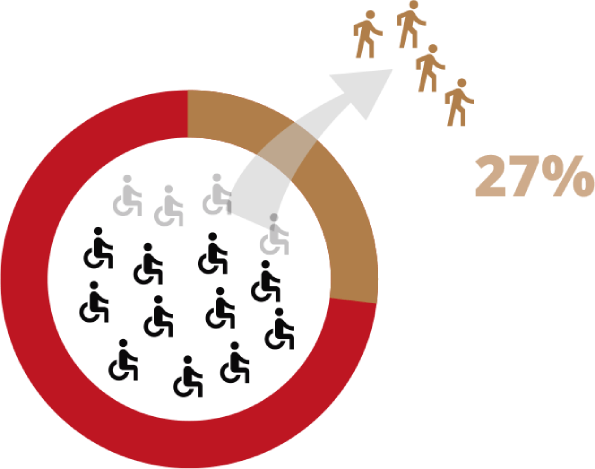
Efficiency comparison of robotic-assisted therapy
versus conventional therapy
Study: Hesse, S. et al «Robot-Assisted Practice of Gait and Stair Climbing in Non-Ambulatory Stroke Patients.» JRRD Volume 49, Number 4, 2012, p. 613–622.
- Conventional therapy up to 100 steps
- Treadmill up to 400 steps
(with/without BWS) - G-EO up to 1400 steps
Therapy comparison with regard to number of steps
Study: Moseley, et al. 2005; Hesse, et al. 2012
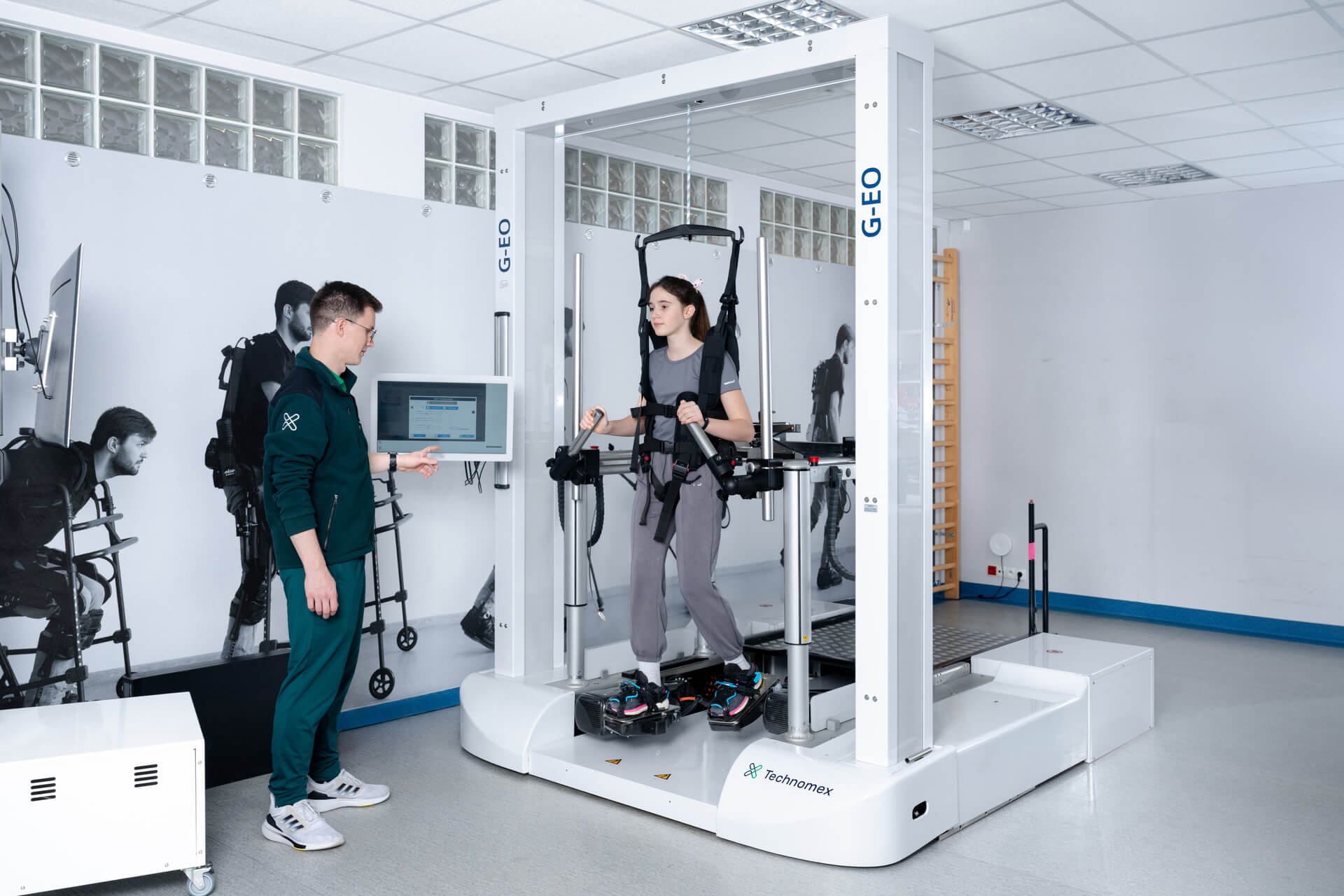
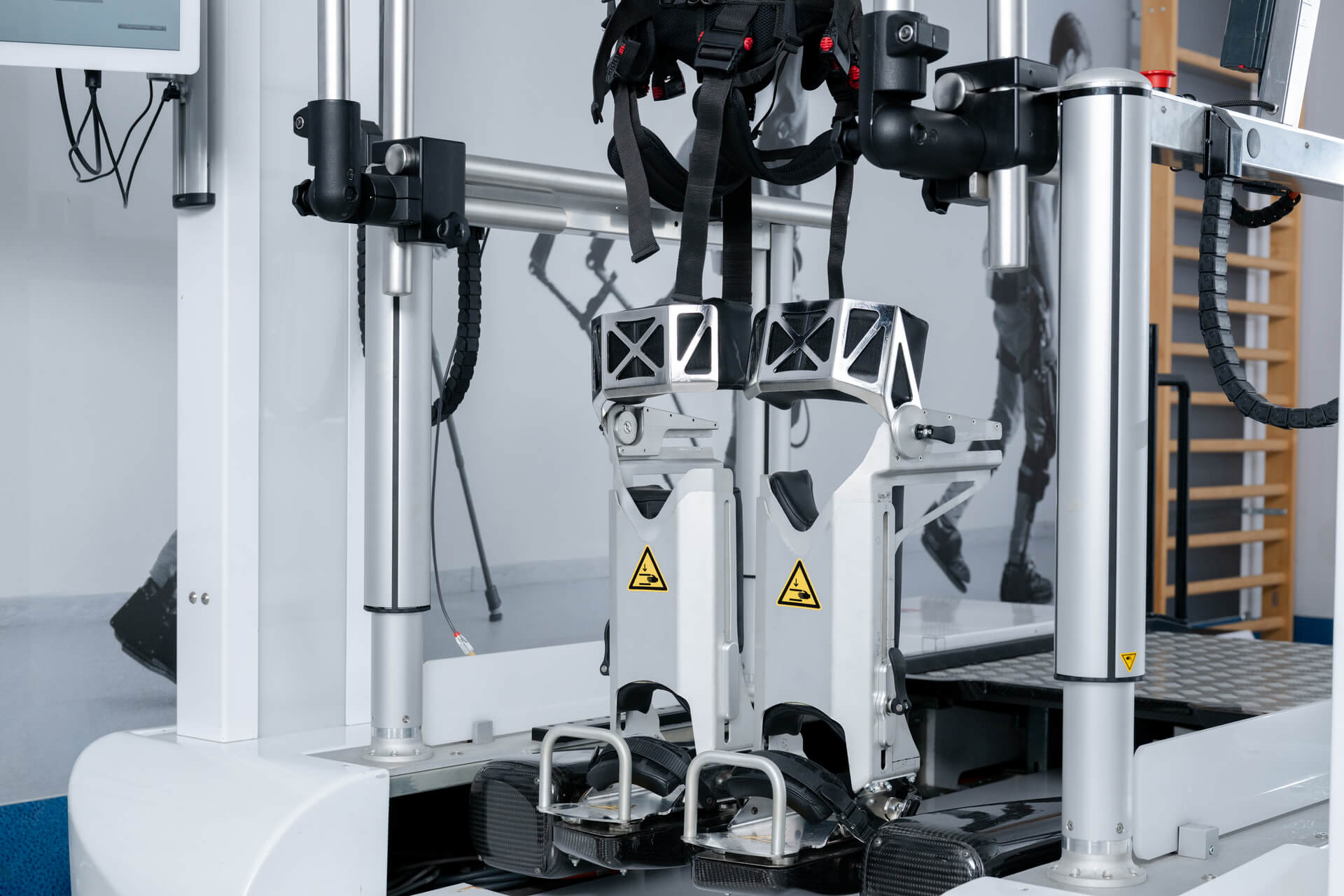
Controlling the body position is another important factor for successful, long-lasting neurological gait rehabilitation. The G-EO gait trainer has a mechanical torso and hip control which operates on three planes - frontal, transverse and sagittal. The therapist can thus control the patient’s body position, and also the natural knee and hip extension. The movement of the hips and torso can also be adjusted optimally to the patient at any time without interrupting the therapy via the graphical user interface.
- Motorized weight support
- plus/minus 0-5 cm; dynamic/static
- Progression through the precise representation of the weight support
- Customized hip and torso guidance, right/left +/- 15 cm; dynamic/static
- Continuous, static setting of the body position, anterior/posterior
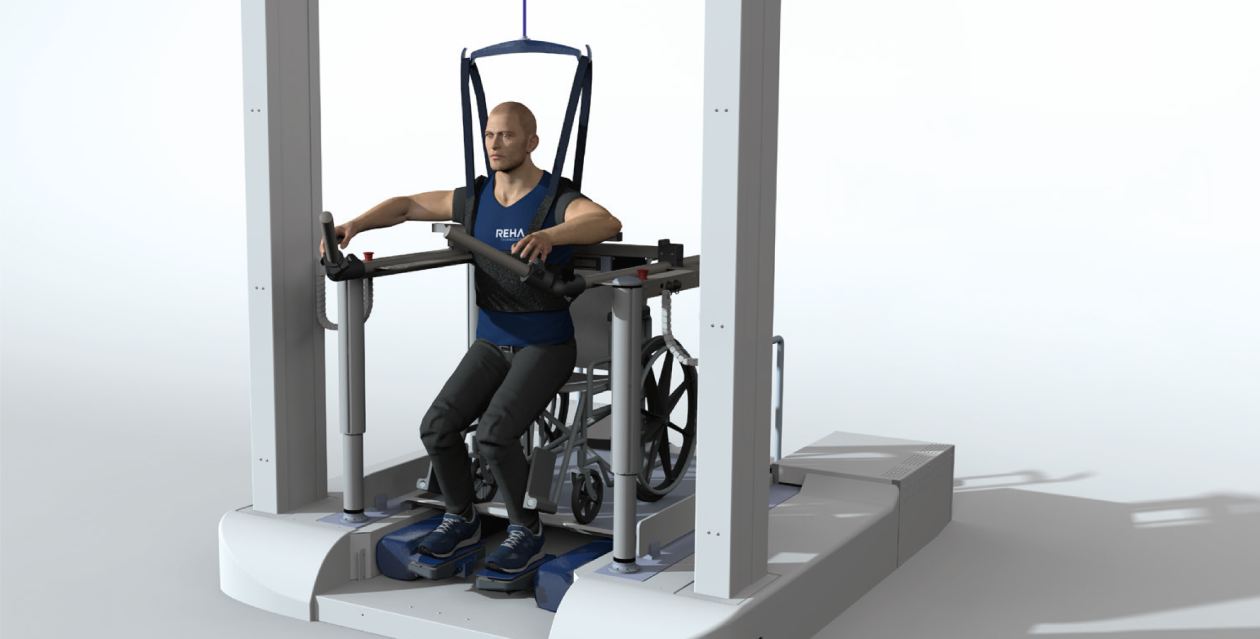
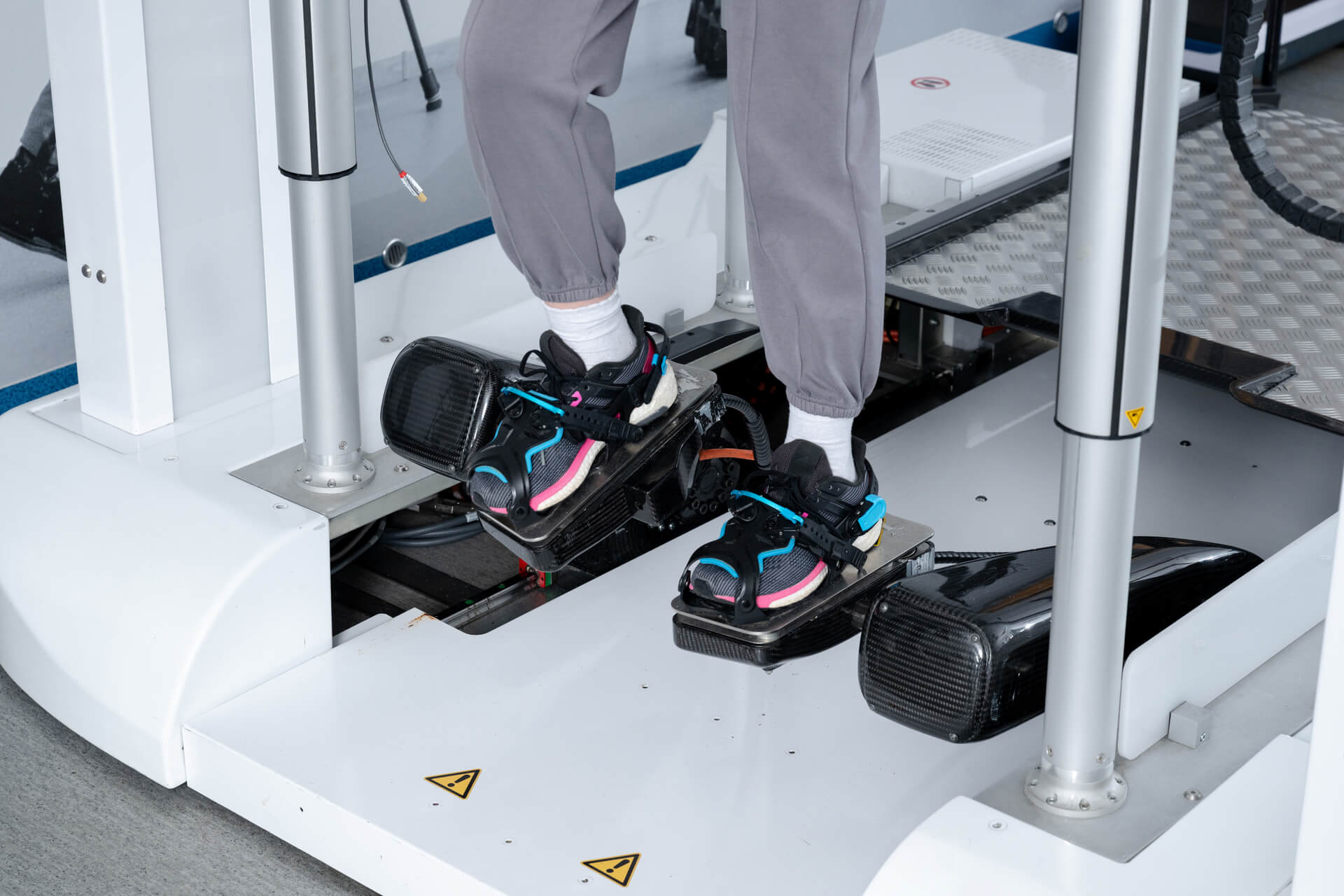
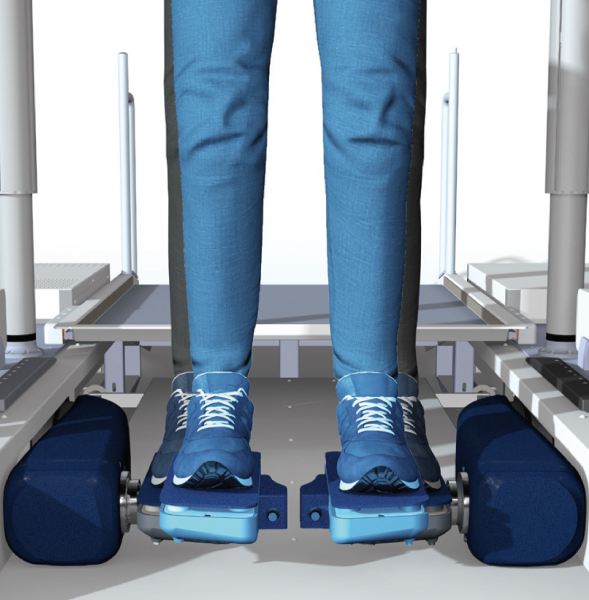
The positioning of the footplates at the same level as the patient’s feet allows optimal access.
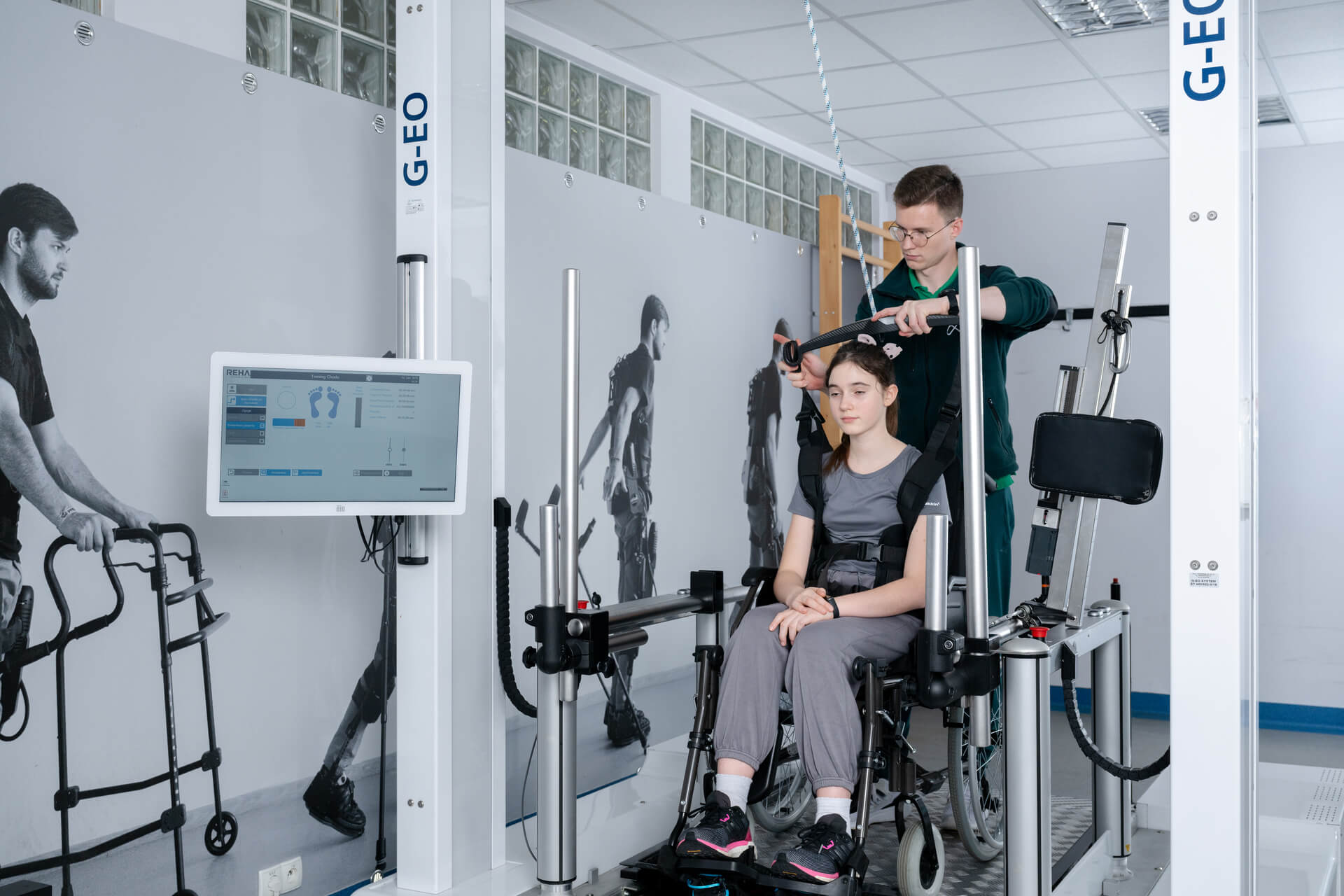
End-effector principle – short patient setup time
The G-EO gait trainer with its end-effector principle represents asignificant reduction in workload for therapists. Guidance of the affected limb requires only distal securing—in this case, the feet. There are no complicated setup and adjustment steps with theaverage setup time for a patient being around five minutes.In device-based gait rehabilitation, this represents an essential factor in an efficient course of therapy.
The patient can begin his/her therapy quickly, avoiding lengthy setup procedures. The therapist’s physical workload is reduced, leaving more time for effective therapy and allowing more patients to be treated in a day.
Natural gait pattern -
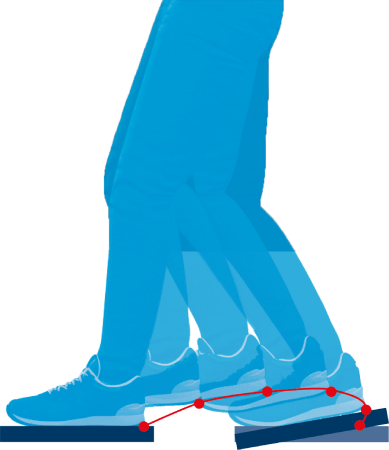
continuously adjusted during therapy G-EO supports patients by providing a simulation of physiological gait pattern and muscle activation. Various gait settings can be changed without interrupting the therapy and allow the gait pattern to be customized in accordance with the clinical image of the patient.
Modularity -
expending the range of applications
The modular nature of Technomex G-EO gait trainer supports therapists and the therapy process as a whole by customizing the therapy goals and expanding the patient population.
The range of applications is broad and diverse:
- Stroke
- Parkinson’s disease
- Multiple sclerosis
- Spinal cord injuries
- Traumatic brain injury
- Cerebral Palsy
- Orthopedic and trauma surgery.
Mechanical knee brace -
for improved knee stability
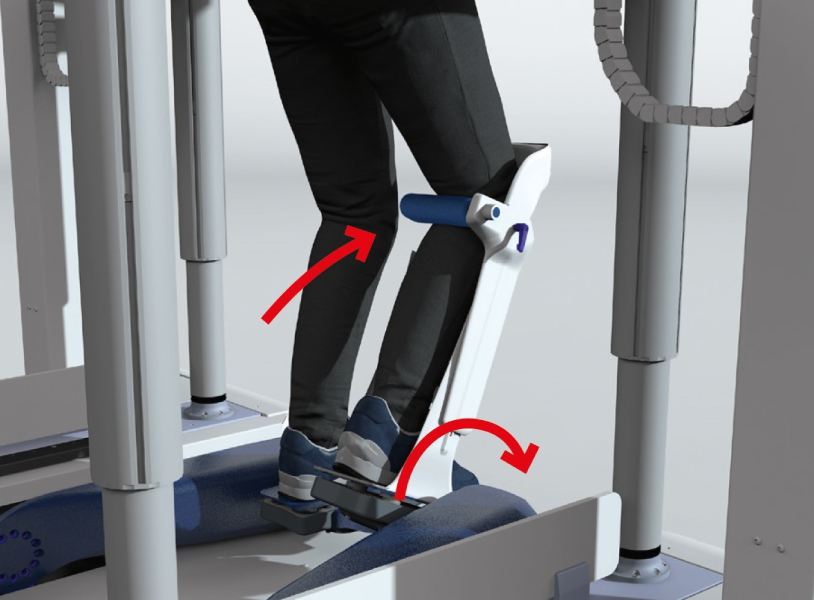
The knee brace provides for stable guidance of the knee and ankle joints. For patients with severely limited to no knee control (FAC 0 to 1),
the mechanical knee brace is the perfect aid for targeted gait therapy. The knee brace guides the patient in a physiologically correct gait pattern. The therapist can thus focus on other important therapy-related priorities, such as their patient’s hip and torso control.
Functional electrical stimulation -
for additional neuromuscular activity
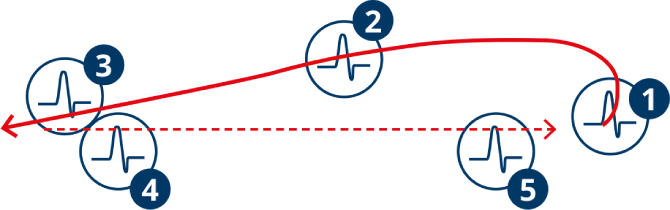
Functional electrical stimulation (FES) can be perfectly combined and synchronized with robotic-assisted gait therapy. It targets affected muscle groups and supports their activation at the appropriate time in the gait
cycle. The patient benefits from a better therapeutic experience.
Gait Modes

Walking of flat surfaces -
forward and backward

Walking on sloping surfaces –
uphill and downhill

Walking on stairs –
stair ascent and chair descent
Activity Modes
Passive – the device performs the movement, simulating the walking cycle
Assisted – the patient initiates the movement, while the device provides support.
Active – the patient performs the movement independently, with optional resistance.

Biofeedback
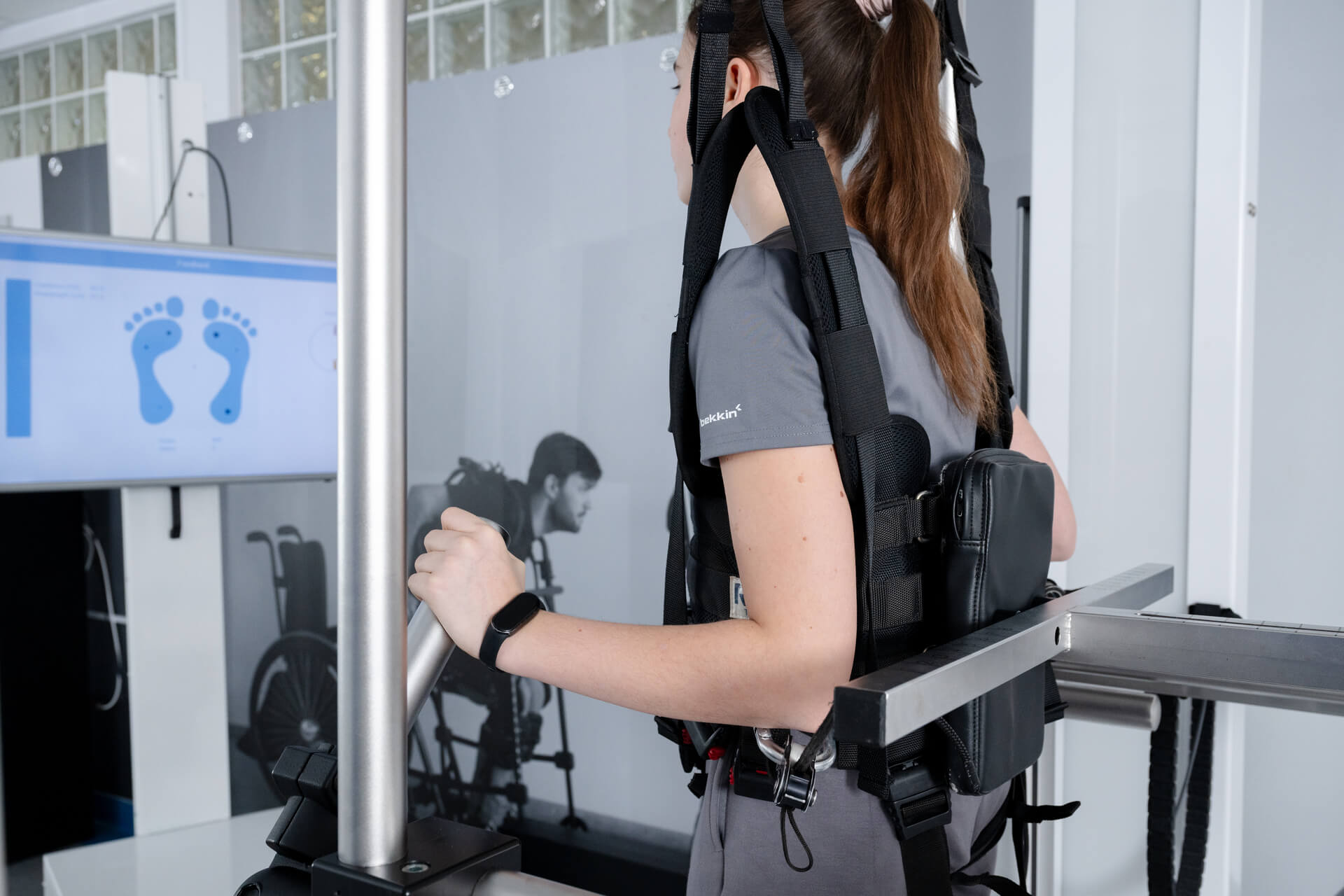
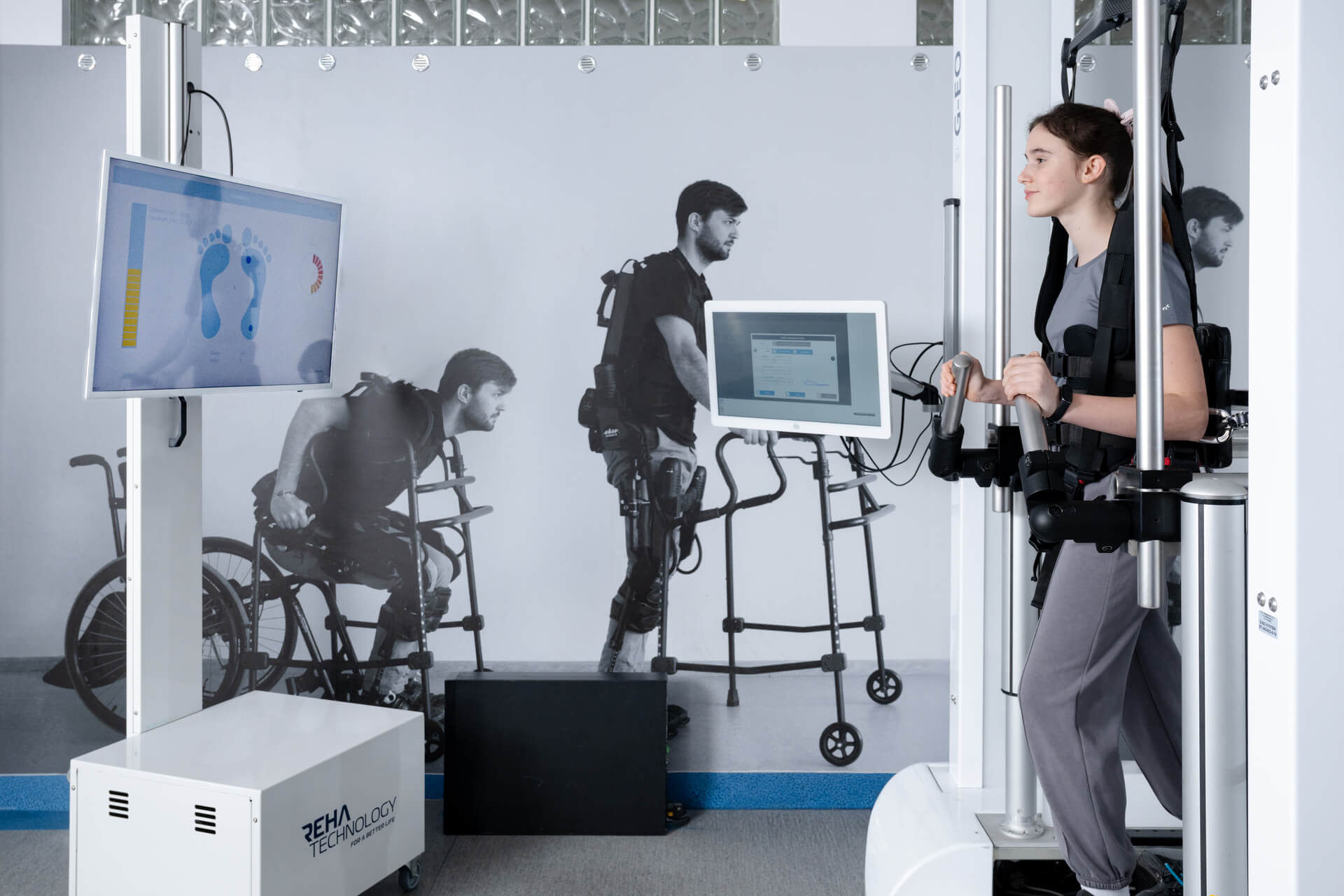
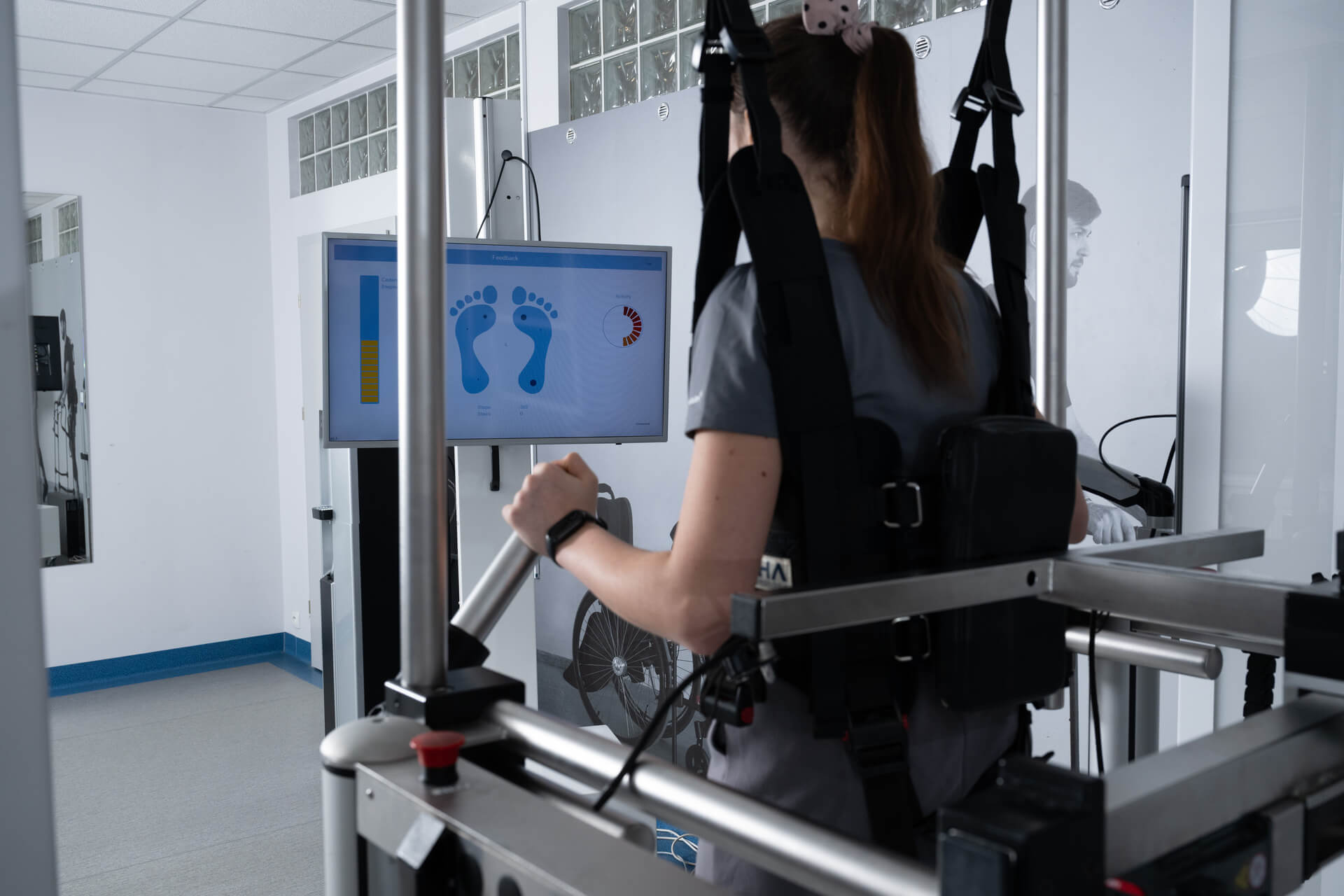
During therapy using the G-EO system, both the physical therapist and the patient receive real-time feedback.
Feedback for the physiotherapist:
- Distance covered
- Achieved speed
- Therapy duration
- Number of steps / stairs climbed
- Patient activity graph
Feedback for the patient:
- Activity displayed as a colored circular chart
- Number of steps / stairs climbed
- Therapy duration
- Load distribution on different areas of the feet
Smart sensors in bases
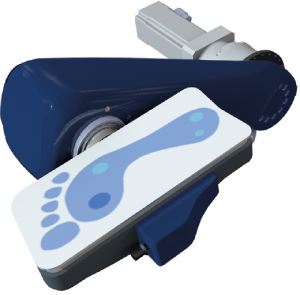
G-EO footrests are equipped with four intelligent pressure sensors that allow both the patient and the therapist
to monitor the force exerted during movement initiation.
Specifications
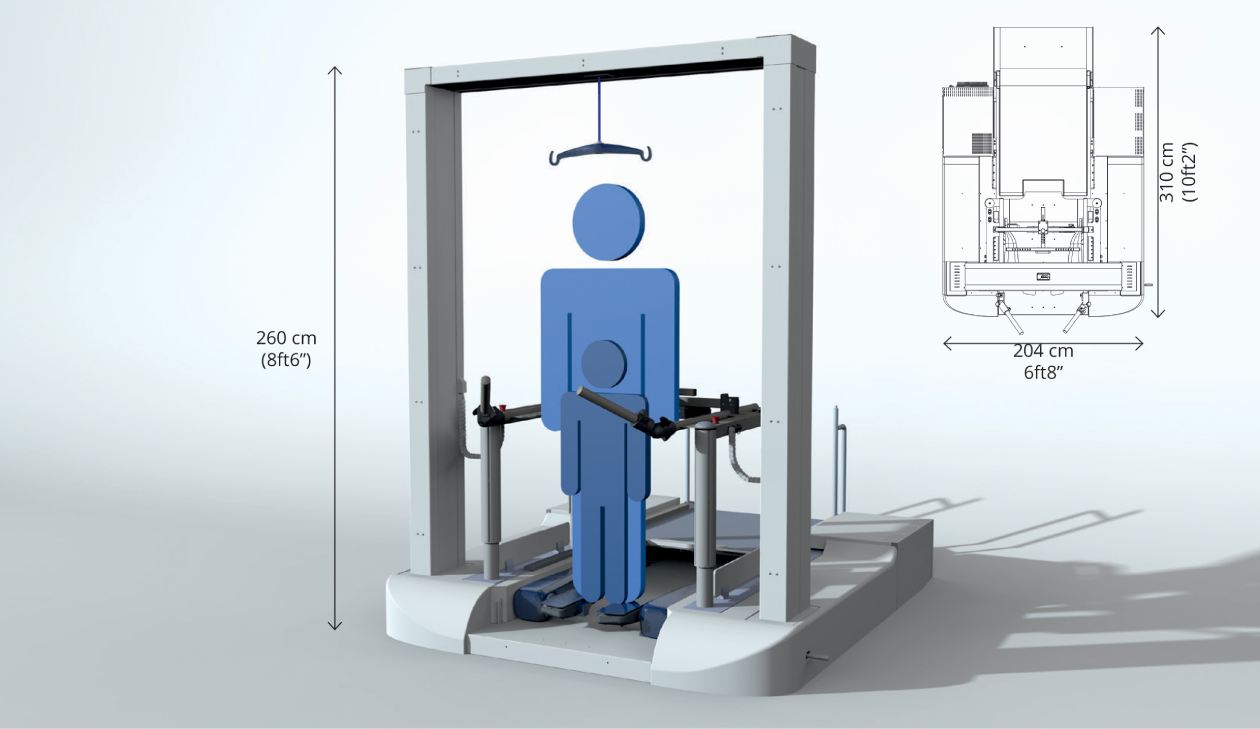
Weight: 800 kg (1760lb)
Power supply: 230V
Max. speed: 2.3 km/h (1.43mi/h)
Max. cadence: 70 steps/min.
Max. step length: 55 cm (22in)
Step height: 8,5 - 20 CM
Ankle angle correction: -10 °/ +10 °
Torso guidance: + / - 15 cm (60in)
Weight support: up to 200kg (440 lbs)
Patient height (min./max.): 90 - 200 CM